
What Is Paid Viewpoint Trait Score and How Does It Affect Your Surveys?
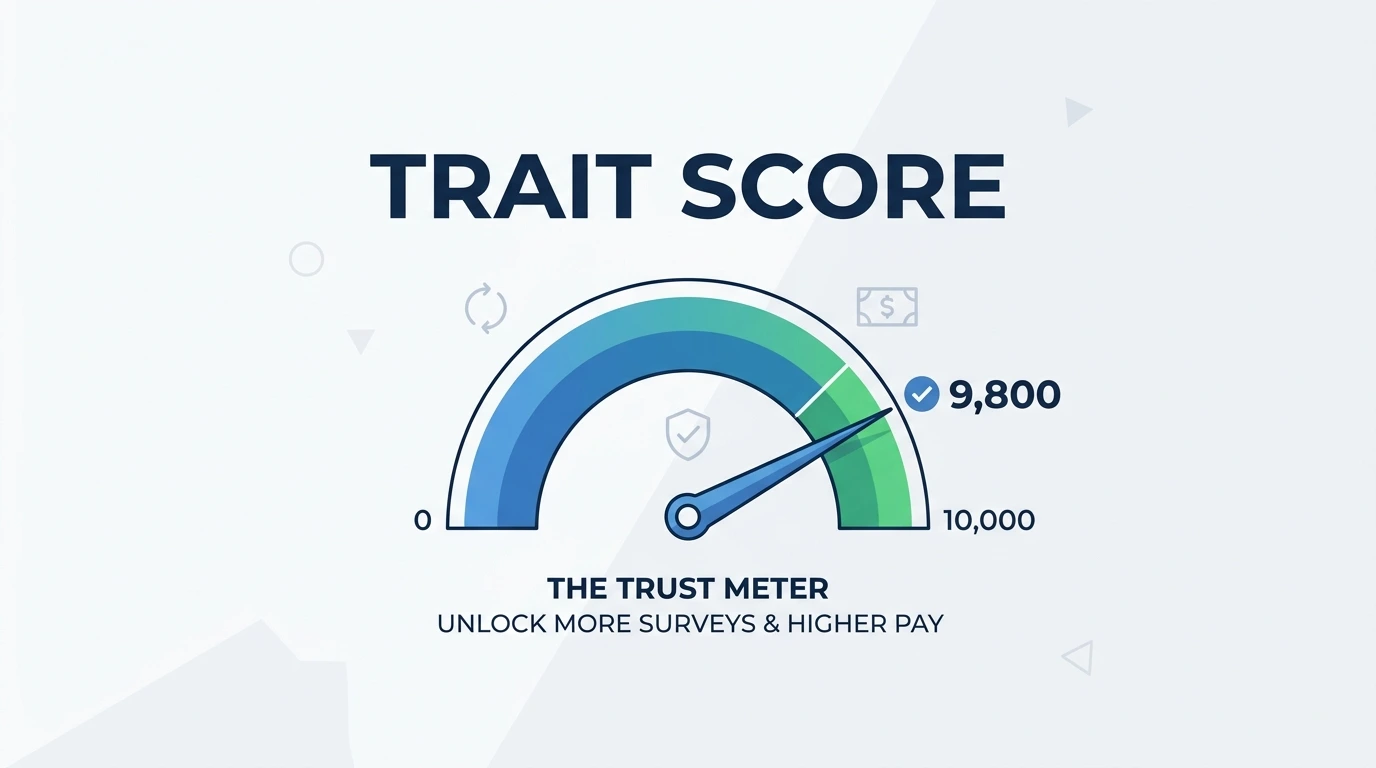
Paid Viewpoint Trait Score is a trust meter, it’s a number that goes from 0 to 10,000, and it tells Paid Viewpoint how consistent, honest, and detailed your profile is. The higher the score, the more the system trusts that you are who you say you are and that you’re paying attention when you answer trait questions.
You build this score by answering what the site calls “Trait Surveys.” These aren’t money-making surveys. They’re short, 1–2 question profiles that pop up regularly. Think of them as quick check-ins: Do you own a pet? Are you the primary grocery shopper in your household? What’s your employment status? Some repeat, and some are new. Every time you answer one, your Trait Score adjusts based on how your answers line up with your history.
Why Does the Trait Score Exist in the First Place?
The core problem is “Survey Sites Don’t Trust You and You Don’t Trust Them”. On a typical survey site, the relationship works like this: You sign up, fill out a basic profile, and then you’re with of millions of other users. When a survey is available, the platform sends it out blindly to anyone who roughly matches the demographics the client wants. Then, the survey itself asks you five or ten more detailed qualifying questions, and if you don’t fit exactly, you’re kicked out
From the user’s side, this feels like a waste of time. From the researcher’s side, it’s expensive and inefficient because they’re paying for a panel of people who might not even be who they say they are. And from the survey platform’s side, they’re stuck in the middle, dealing with angry users and unhappy clients.
Paid Viewpoint’s solution is based on a simple idea: Do the qualifying work before the survey ever reaches you. Instead of asking “Do you own a car?” inside a paid survey and disqualifying you if you say no, they ask you that same question weeks earlier in a free Trait Survey. They store your answer. When a car-related paid survey comes along, they only send it to members who already said yes.
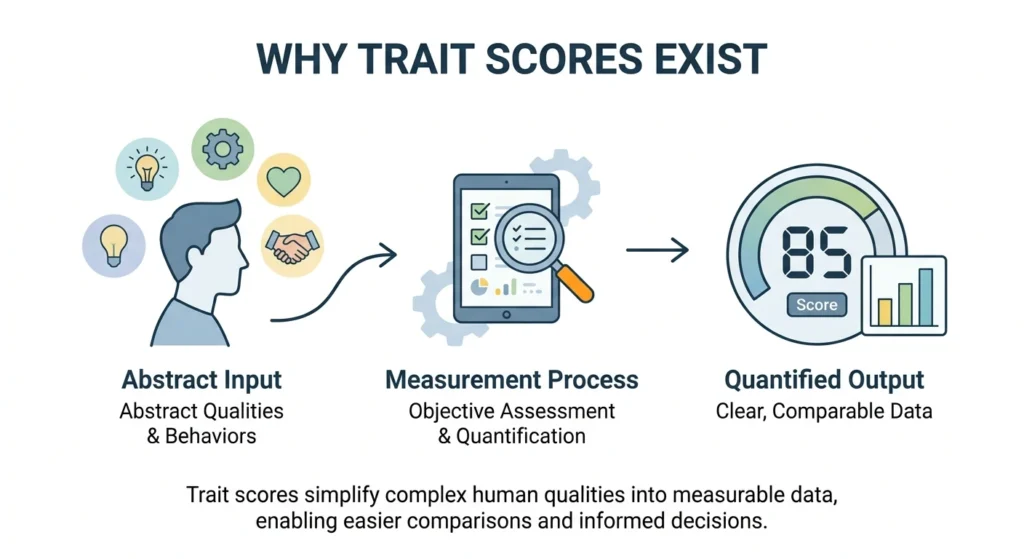
For this to work, the system needs to be absolutely sure you’re consistent and honest. If you said “no car” in January and then “yes car” in March, a researcher can’t trust the inconsistent data. That’s where the Trait Score comes in. It’s the system’s confidence meter. It tracks how often your answers stay the same, and how thoroughly you’ve filled out your profile traits. The higher your score, the more confident the platform is that you are exactly who your profile says you are.
Studies have shown that screen out rates can be as high as 60–80% and it is normal. That means you’re giving away your time and data for nothing.
Paid Viewpoint didn’t want to be another screen out machine. So, they built a system around a single idea: know your users so well that you never have to disqualify them later. The mechanism for that is the Trait Score.
Why Not Just Use a Simple Profile?
You might wonder, why all this complexity? Why not just let me fill out a long profile one time and be done? The answer is that people’s lives change, and some people lie or click randomly just to get through. By showing repeated trait surveys over time and cross-referencing answers, Paid Viewpoint creates a system that’s remarkably hard to cheat. It naturally filters out bots, inattentive clickers, and people who exaggerate their demographics. The result is a panel of respondents that researchers are willing to pay a premium for, which in turn allows Paid Viewpoint to offer a smoother, frustration-free experience.
In short, the Trait Score exists to make the whole system honest and efficient. Without it, Paid Viewpoint would just be another survey site full of screen outs and time-wasting. With it, they can actually deliver on the promise of “answer surveys, get paid, no games.”
How the Score Actually Affects Your Surveys
Your Trait Score directly controls three things:
1. How many survey invitations you get
Paid Viewpoint’s algorithm matches surveys to users based on their confirmed traits. A user with a low score (say, under 4,000) is seen as unreliable the system isn’t sure about your honesty. So, it holds back survey invites until the score improves. They explain it clearly in their help center: “If your Trait Score is too low, we may limit your survey invitations because we cannot be sure that your profile matches the target audience of our clients.”
2. Screen out Rate Drops Drastically
Because Paid Viewpoint already knows your traits from those constant little profile questions, the surveys they do send you are almost always a perfect match. No more answering six demographic questions only to be told you’re not a fit.
3. Survey Opportunities and Earnings
According to Paid Viewpoint’s FAQs section, users with higher Trait Scores can receive the maximum allowed number of market research surveys per month. The company also states that achieving a high Trait Score can increase the amount paid for each research survey answer.
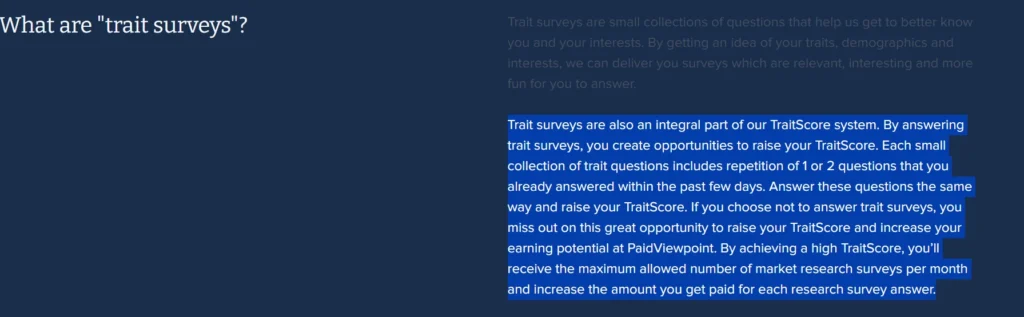
That doesn’t mean every survey suddenly becomes high paying. Survey rewards still vary based on factors such as survey length, complexity, and client requirements. However, Paid Viewpoint’s own documentation indicates that maintaining a high Trait Score may improve both the quantity of survey invitations and the earnings potential of the surveys you receive.
Why Trait Score Might Suddenly Drop
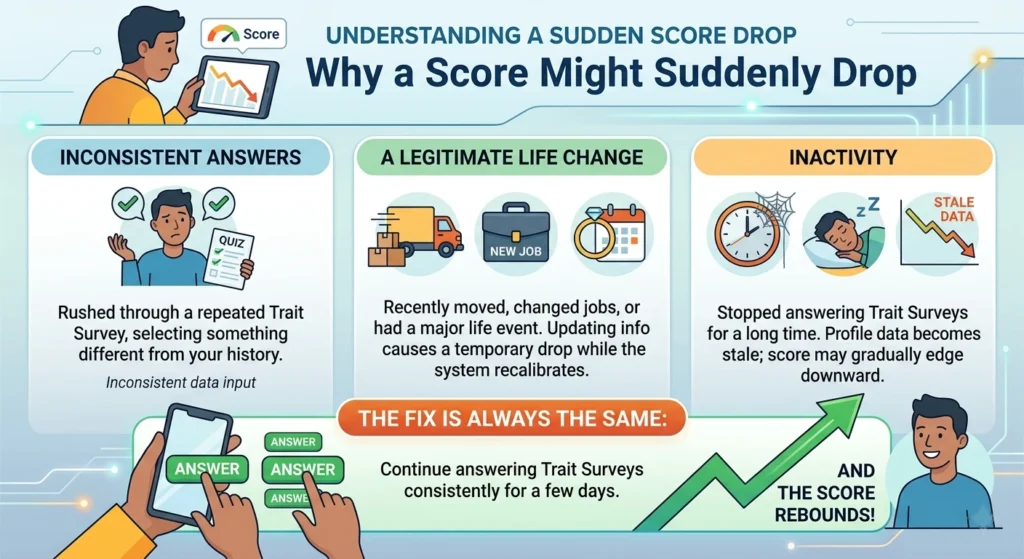
Seeing your score going down can happen due to:
- Inconsistent answers on a repeated Trait Survey – You might have rushed and selected something different from your history.
- A legitimate life change – If you recently moved, changed jobs, or had a major life event, updating your info can cause a temporary drop while the system recalibrates.
- Inactivity – If you stop answering Trait Surveys for a long time, your profile data becomes stale, and the score may gradually edge downward.
What are the benefits of having a high Trait Score
Here are all the perks of having a high Trait score:
1. More research survey opportunities
Within the range of the number of surveys permitted each month, Paid Viewpoint offers more opportunities to members with higher Trait Scores and accounts in good standing.
2. Higher pay per survey
The respondent pool is divided into groups, and the higher-level groups get paid more for each survey answer. The pay-per-survey is also higher based upon your Trait Score and other factors.
3. Lower cash-out thresholds
Members with high trait scores and good standing are eligible for lower redemption thresholds after their first redemption. Eligible members can redeem rewards the second time at a $10 threshold, and all following redemptions at $5, as long as they remain in good standing.
4. Ability to cash out with gift cards
Members with high trait scores and good standing are also eligible to cash out with gift cards when regionally available.
5. Maximum number of research surveys per month
By achieving a high Trait Score, you’ll receive the maximum allowed number of market research surveys per month.
6. More relevant and interesting surveys
Being candid in your answers to trait questions will increase your Trait Score and ensure a more interesting and relevant survey experience
FAQs
Q1. Is a Perfect 10,000 Necessary?
No, based on community discussion and logic, there’s no evidence that hitting exactly 10,000 gives you a bonus over, say, 9,600. Most benefits kick in well before the maximum. The general consensus among users is that the “sweet spot” is above 9,000.
Q2. How does the Trait Score affect my cash-out threshold?
As stated in PaidViewpoint’s policy, members with a high trait score and good standing qualify for these lower thresholds after their first cash-out:
– First time: $15
– Second time: $10
– Third time and all following: $5
This only applies if you remain in good standing. The platform can revert thresholds to $15 at any time.
Q3. Do I need a high Trait Score to use PayPal or get gift cards?
All payments are through PayPal or Virtual Incentives regardless of your score. However, eligibility for gift cards (where available) is only offered to members with a high trait score and good standing, as per the official policy.
Q4. Does a higher Trait Score mean higher-paying surveys?
Yes. According to PaidViewpoint, a higher Trait Score can increase both the number of surveys you receive and the amount you get paid for each research survey answer. While the company doesn’t explain the exact formula, maintaining a high Trait Score may improve your overall earning potential.